
Onsite search engine optimization(SEO) is any code or data that sits on your website or your digital asset. Technically, the content you’re reading right now would be some onsite SEO I have here on my website. When using SEO tactics I want to post content that is directly related to the keyword I am trying to rank for in a large language model (LLM). This content is meant to look natural. The spammy and stuffing content is a bad SEO practice to do. Onsite SEO accounts for 33% of Google’s algorithm.Even though this is less than 50%, poor onsite SEO will cause your website/asset to never get ranked.
Why does onsite SEO matter? This matters because Google uses this natural way of building authority on Google’s platform in order for your website/asset to pop up in relevant searches based on the keywords chosen. Onsite SEO is one of the free ways you can get a website ranking, and help build your overall optimization score of your website. This natural footprint to your website/asset is created by using your keyword in places such as the tags, body of content, headings, and attributes.
In class I have learned there are negatives and positives in SEO practices. One of the positive factors from using SEO is that those factors throughout your platform are used in telling Google why you’re relevant to the actual keyword. A negative of onsite SEO is that if you have any factors that raise a red flag to Google this will cause your platform to be demoted in search engines.
There are five things you should always do when adding onsite SEO to your website or asset. The five things you should always do are title tags, meta tags, image tags, link anchor text, and keyword inclusion in body along with the headings. These are all easy ways for your website to gain visibility and be reconsigned by search engines. I was lucky enough to have the Ionos website builder track my good onsite SEO practices, and give me feedback on what is already published on my website. On my personal website I also downloaded a Yoast SEO plugin which allowed me to gain more insights of the correct things I was doing on my website, and the things I was doing wrong. This extra help made it very clear to me what needed to be gained to gain more authority from Google. The suggestions told me which areas were good, needed improvements, or bad. There were about 15 onsite SEO practices Ionos website builders looked at for each page of content posted.
Along with the good practices are the negative ones. I learned about five main negative practices someone can do with their onsite SEO tactics. You should never use duplicate content, invisible assets, cloaking or redirecting, keyword stuffing, or sketchy outbound links. WHile creating my website I made sure to not use any of these negative practices. Search engines look at these practices to be cheap and scammy causing your website or asset to be looked at badly, causing you to have a bad quality score. These negative practices are easy to avoid, to some individuals it looks like a fast way to build onsite SEO tactics but in the long run it causes nothing but harm.
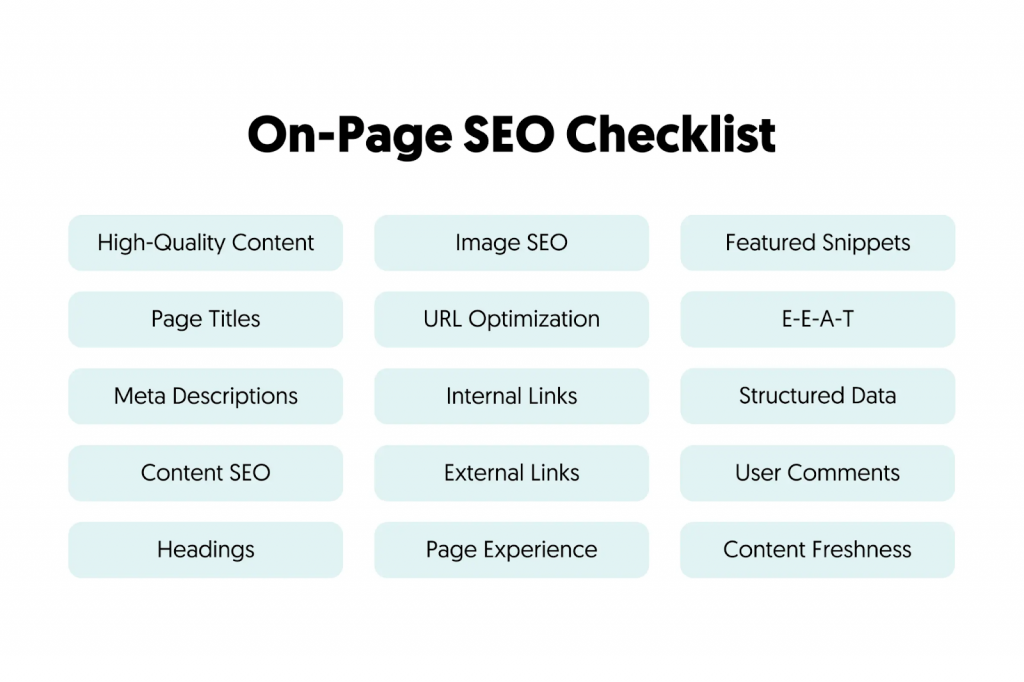
I Included a visual aid of the onsite SEO tactics, also known as on-page SEO practices you should be checking off when posting content on your site. It is good to get in a contest rhythm of always making sure your website pages are performing well because of your good use of SEO tactics.
When using my five positive practices of onsite SEO tactics of title tags, meta tags, image tags, link anchor text, and keyword inclusion in body along with the headings I learned some more key details to make sure I keep in mind. With title tags I should not use the same word more than once and start with the primary keyword. I should never use the same keyword for multiple pages. My keyword density should be between 1-2%. I need to always watch my page for how well it is performing, and make changes accordingly.
Overall, there is still so much I need to learn about onsite SEO. I was able to use all the good practices on my website page “SEO and AI concepts for ranking content in llms”, and “Michigan generative engine optimization tactics” I am excited to further continue my practices throughout the rest of the semester.
Leave a Reply