
Offsite search engine optimization (SEO) tactics are links that are created off of your website, and creates authority to your website in order to help your website rank. Offsite SEO is anything that is made for your website that is not on the actual site itself. Therefore offsite SEO is the complete opposite of onsite SEO. Both offsite and onsite SEO tactics need to be used in order to create authority. An individual can not choose to only practice one type of SEO tactics. Google uses meaning, relevance, and quality to determine your website’s quality score. This quality score is then used to determine how much you would pay for your ad in an ad auction based on max bid, ad rank, competitors ad rank, and the relevance of the landing pages.
When creating backlinks you want to make sure that you strive for content that is thematically related, and with high reputation. This is because not all of these backlinks are created equally in Google’s eyes. There are contextual and noncontextual backlinks, and it is always better to use contextual backlinks. Contextual backlinks are better to use because they send better singles to Google like high relevance, and authority. Some backlinks have a lower quality than others, while some are higher than others. You want to always look out for the highest quality backlinking websites. Low quality backlinks can affect the authenticity of your website. When creating these links you want to make sure your domain and IP address have a high volume of diversity. This link diversity helps get your website shown in front of more people to draw in more relevant traffic towards your site.
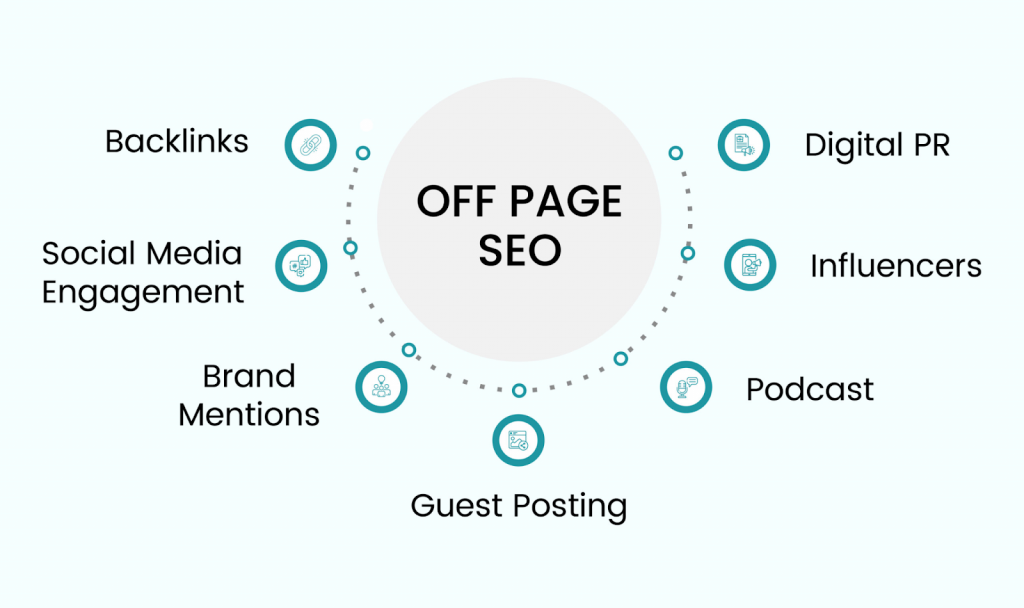
In my MKT 363 class we went through ten different methods/ways to create backlinks. These ten different methods are not listed in any way. All methods are important, and play a huge role in offsite SEO tactics. The first method, and one of the easiest I was taught was 2-way, and 3-way link exchange. This is when you and another person, or two other people agree to link your website to theirs. This helps everyone involved in the situation, and it is better to 3-way link exchange than 2-way. The second method is profile linking, and this is where you link the website on a profile page. An example of this would be an all about me forum on facebook, and I choose to add my website link in there for easy access. The third way we learned about was article creation where you submit an article that contains your website’s URL on a 2.0 website page that is meant for article submissions. The fourth way we discussed how to build backlinks is by blog creation. The fifth way is similar to four, with blog commenting. These two methods include posting a blog on a 2.0 website that includes your website’s URL, and commenting on another blog post (or even the one you created) by dropping another link to your website.
The sixth way I learned about it was forum posting. The seventh way was link baiting, which is when you make a webmaster to create a link for added value for you. The eighth way was registration sites that collect data, and statistics about webpages. The ninth way was dictionary links. Last but not least, method number ten of creating offsite backlinks was social bookmarketing sites.
All these methods are unique in their own ways but all the methods give an individual choice of how they want to create backlinks for their website. Without the use of offsite SEO, it will be very difficult for a website to rank. Offsite SEO is key to website creation, and one must know how to do this in order to be successful. In my personal website project, I used 3-way link exchanges, blog creation, blog commenting, and article submission. I used these four main methods for my project because I found they were fairly easy to create, and I found a rhyme that worked for me.
Leave a Reply