

Explore Essential seo and ai concepts for ranking content in llms
Understanding SEO and AI concepts for ranking content in LLMs is essential for digital marketing students who want to stay competitive in the modern search landscape. In today’s AI-driven world, mastering the connection between SEO and AI concepts helps shape how your content is discovered, ranked, and trusted by large language models. Because LLMs analyze context, intent, and engagement, learning how SEO and AI concepts for ranking content in LLMsinteract provides a clear roadmap for long-term visibility. Furthermore, these insights equip students with the strategies needed to improve audience reach, enhance user experience, and adapt to the rise of generative engines. Ultimately, understanding SEO and AI concepts for ranking content in LLMs empowers creators to design content that performs well not only in traditional search engines but also within AI-driven discovery platforms.
Mastering SEO and AI Concepts for Ranking Content in the Digital Era
In today’s digital landscape, understanding SEO and AI concepts for ranking content is essential for marketers aiming to boost their content’s visibility and performance. Search Engine Optimization (SEO) traditionally focuses on strategies like keyword usage, backlink building, and meta optimization to ensure content ranks higher in search engine results. However, as algorithms become more sophisticated, integrating artificial intelligence (AI) into SEO practices has become a game-changer.
AI technologies, such as machine learning and natural language processing, enhance SEO by helping search engines understand content at a deeper level. AI-powered tools analyze large datasets, predict trends, and optimize content for user intent, not just keywords. For instance, Google’s RankBrain uses AI to interpret search queries and match them with the most relevant content, focusing on context rather than exact match keywords.
Incorporating AI into SEO helps marketers create high-quality, contextually relevant content that resonates with both search engines and users. By utilizing AI-driven insights, digital marketers can stay ahead of trends, identify keyword opportunities, and optimize their content for long-term success. As SEO and AI continue to evolve, mastering these concepts will be key to achieving sustained rankings and driving organic traffic.
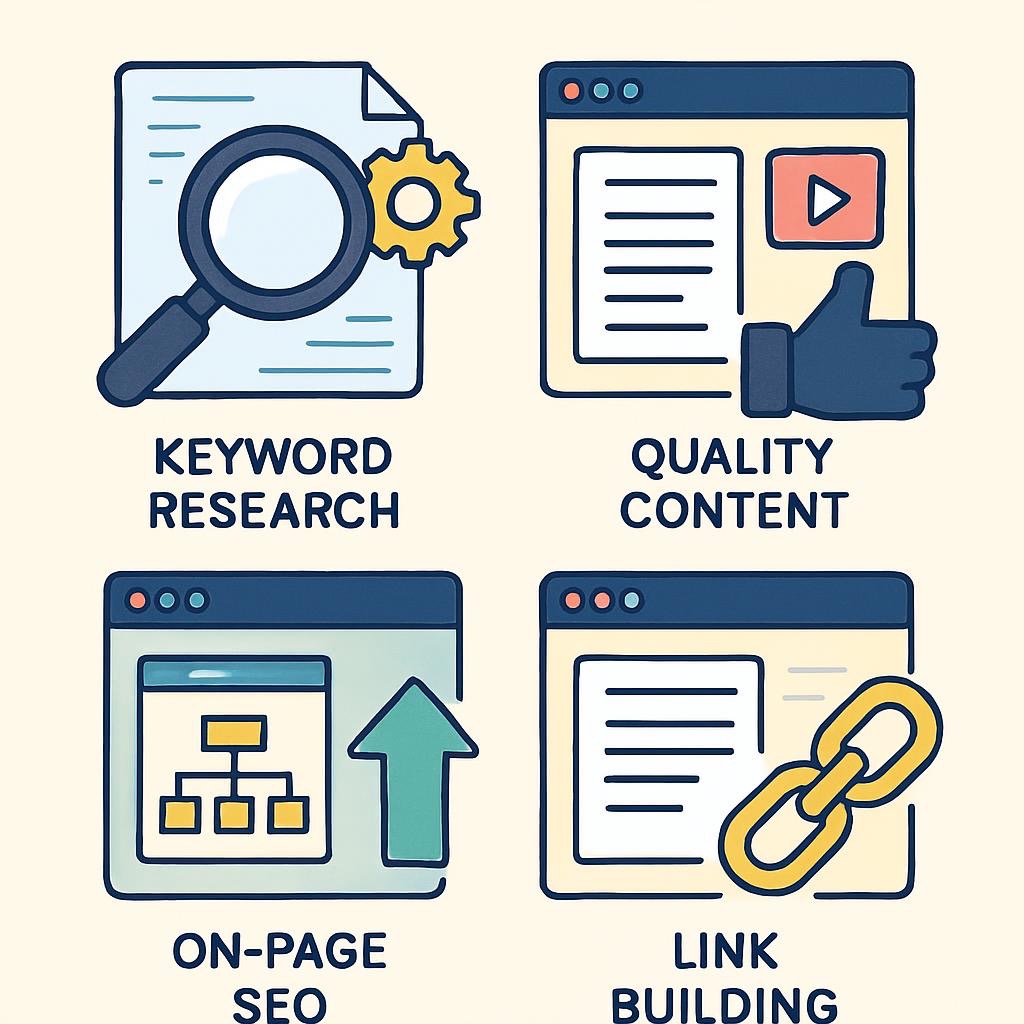
SEO Fundamentals
Understand core SEO principles to boost content visibility and search engine performance.

AI in Digital Marketing
Discover how AI technologies transform marketing strategies and optimize content effectiveness.

Content Ranking Techniques
Gain insights into methods that enhance content placement within language learning models.
“Content is king, but engagement is queen, and she rules the house.”
— Mari Smith, Social Media Expert
Dive Deeper into seo and ai concepts for ranking content in llms
Encourages students to engage further with expert insights on SEO and AI in content ranking.
🧭 Explore Essential SEO and AI Concepts for Ranking Content in LLMs
In today’s fast-evolving digital landscape, understanding SEO and AI concepts for ranking content in LLMs is no longer optional—it’s a necessity for digital marketing students and professionals aiming to stay ahead. As large language models (LLMs) transform how users discover and interact with information, mastering the synergy between SEO and AIbecomes crucial for achieving visibility and credibility.
By learning how SEO and AI concepts intersect, marketers can design content that LLMs interpret as relevant, trustworthy, and contextually accurate. Moreover, since LLMs analyze user intent, engagement signals, and contextual depth, understanding these elements provides a roadmap for long-term ranking success.
In addition, embracing SEO and AI concepts for ranking content in LLMs helps optimize for both traditional search engines and emerging AI-powered discovery systems. This dual optimization ensures your content remains competitive as algorithms evolve toward generative, conversational experiences.
Ultimately, mastering SEO and AI concepts for ranking content in LLMs empowers digital creators to craft strategies that enhance audience engagement, refine brand authority, and secure sustainable visibility in the age of intelligent search.
Mastering SEO and AI Concepts for Ranking Content in the Digital Era
In the ever-evolving world of digital marketing, mastering SEO and AI concepts for ranking content is crucial for staying ahead of the competition. As search engines grow more sophisticated, understanding how AI and SEO work together is essential for creating content that not only ranks but also engages your audience. Let’s dive into some key concepts to help you optimize your content and boost your rankings!
Why SEO and AI Matter for Ranking Content
- Search Engines Are Smarter: Modern search engines like Google are powered by AI-driven algorithms, meaning they can understand user intent and content context better than ever before.
- SEO is More Than Keywords: It’s not just about inserting keywords anymore. The focus is on high-quality content, user experience, and relevance.
- AI Helps Improve SEO: By automating tasks like keyword research, content creation, and trend analysis, AI tools can enhance your SEO strategies and save time.
Key AI Concepts That Enhance SEO
- Machine Learning: This is the backbone of AI in SEO. It helps search engines better understand patterns in data, improving how results are ranked based on user intent.
- Natural Language Processing (NLP): NLP allows search engines to interpret and rank content based on meaning, not just keywords. This means that content that answers questions in a natural, conversational tone will rank better.
- Generative Engines: Tools like GPT-4 generate content that fits user intent, making it easier to scale high-quality posts that align with SEO best practices.
How AI Improves SEO Content Strategy
- Automated Keyword Research: AI can process vast amounts of data and identify high-ranking keywords faster than a human ever could. This means you’ll know exactly what your audience is searching for.
- Optimized Content Creation: AI-powered writing tools can generate blog posts, product descriptions, and social media captions that are SEO-optimized. This saves you time while still producing relevant, engaging content.
- Content Personalization: AI allows for personalized content recommendations based on user behavior, which can increase engagement and lead to better rankings.
Practical Tips to Integrate SEO and AI into Your Strategy
- Focus on User Intent: With AI’s understanding of context, creating content that addresses what your audience is actually searching for is more important than ever.
- Use AI for Content Optimization: Tools like Surfer SEO and Frase use AI to analyze SERPs and suggest ways to optimize your content for better rankings.
- Write for Humans, Optimize for Machines: AI can help with keyword optimization, but your content should always be natural and engaging for readers.
Conclusion: Stay Ahead with SEO and AI
To thrive in today’s competitive digital environment, leveraging SEO and AI concepts for ranking content is no longer optional—it’s essential. With AI-driven tools and strategies, you can create content that resonates with both users and search engines, ensuring long-term visibility and growth.
- Embrace AI-powered tools for keyword research, content creation, and SEO analysis.
- Prioritize quality content that answers real user questions and aligns with search intent.
- Stay ahead by continually adapting your SEO strategies to incorporate the latest AI trends.
By understanding and mastering these AI and SEO concepts, you’ll not only improve your rankings but also future-proof your digital marketing strategy!
Unlocking the Power of SEO and AI for Content Ranking Success
As digital marketing becomes more intricate, leveraging SEO and AI concepts for ranking content has never been more essential. The fusion of AI and SEO helps marketers optimize their content strategy, ensuring it ranks well on search engines while remaining user-focused. Let’s dive into how these two elements work together and how you can use them to your advantage!
What Makes SEO and AI a Winning Combination?
- AI Brings Precision to SEO: SEO is no longer about guesswork. With AI’s ability to analyze data, predict trends, and understand user intent, SEO has become more accurate than ever before.
- Content Is King, But AI Is the Crown: AI enhances content creation by automating time-consuming tasks, leaving marketers more time to focus on high-level strategies and creativity.
- Adaptive SEO Practices: As search engine algorithms evolve, so does the need for adaptive SEO. AI helps optimize your content based on real-time data and algorithm changes.
Key AI Technologies that Elevate SEO
- Deep Learning: Deep learning uses artificial neural networks to process complex data, which can predict what users want before they even search for it. This leads to more targeted SEO strategies.
- Content Optimization Algorithms: AI-powered tools use algorithms to analyze your content against top-ranking pages. These tools suggest edits to improve content relevance and keyword usage, helping to boost rankings.
- Predictive Analytics: By analyzing patterns in search behavior, AI can forecast trends and suggest which topics to focus on. Predictive analytics ensures you’re always one step ahead in your content creation.
How AI Transforms SEO Content Creation
- Automated Content Generation: AI can create SEO-optimized articles, blog posts, and even landing pages by understanding keyword intent and user engagement. This ensures your content is both relevant and highly searchable.
- Smarter Content Curation: AI tools like BuzzSumo or Clearscope use machine learning to analyze the top-performing content in your niche and recommend topics or keywords that are trending.
- AI-Powered Editing: Many AI platforms can help refine your writing style for SEO by ensuring the correct use of headings, subheadings, keywords, and content flow, which is essential for both readability and ranking.
How to Integrate SEO and AI for Maximum Impact
- Start with Search Intent: AI helps determine the why behind a search query. By understanding user intent, you can create content that truly answers the questions people are asking, improving engagement and boosting rankings.
- Leverage AI Tools for Research: Use AI-based tools to uncover content gaps, competitive insights, and long-tail keywords that your audience is searching for. This will refine your SEO strategy and help you stay competitive.
- Focus on User Experience: AI not only analyzes keywords but also understands how people interact with content. By focusing on user experience, such as fast page loading times and mobile responsiveness, you’ll improve your SEO ranking over time.
Practical Steps for Using AI and SEO Together
- Combine Data Insights and Creativity: Use AI to analyze data and SEO performance, but don’t forget the human touch! Creativity and original content are still vital for building brand trust and increasing audience loyalty.
- Optimize for Voice Search: With AI powering voice assistants like Siri and Alexa, voice search is growing rapidly. Focus on conversational keywords and natural language to cater to this new search trend.
- Utilize AI for Local SEO: AI-driven tools can help enhance local SEO by providing valuable insights into local trends, helping you optimize for geo-targeted keywords and improve visibility within your community.
Conclusion: Leverage AI for Future-Proof SEO Strategies
The future of SEO and content marketing lies in the seamless integration of AI and SEO concepts. By incorporating AI-powered tools into your SEO strategy, you can enhance your content’s quality, relevance, and overall performance.
- Use predictive analytics to stay ahead of search trends.
- Create content with purpose that resonates with both search engines and users.
- Embrace AI-driven SEO tools to streamline your process and ensure your content ranks.
As AI continues to shape the digital marketing landscape, embracing these concepts will keep you at the forefront of SEO innovation, driving traffic and long-term success
Boost Your Website’s SEO with Simple Tips
Improving your website’s SEO doesn’t have to be hard. With a few simple changes, you can improve your rankings. Let’s take a look at the most effective ways to boost SEO.
Give this a watch to better your unders
https://www.youtube.com/watch?v=ELdXJUR1ayI&utm_source=chatgpt.com
1. Keep Sentences Short and Clear
Long sentences can be hard to read. Break them down into shorter ones. Keep most sentences under 20 words. This makes your content easier to read and more likely to rank higher.
- Why it matters: Short sentences are easier for users and search engines to process. Google values readability.
- Quick tip: Use periods instead of commas to break long sentences.
2. Use More Transition Words
Transition words help your content flow smoothly. They guide readers through your ideas. They also make your writing more engaging.
- Examples: Use words like “first,” “next,” and “in addition” to link your ideas.
- SEO benefit: Google favors well-structured content with smooth transitions.
3. Optimize for Mobile
More people browse the web on phones than desktops. Your website must be mobile-friendly. A mobile-responsive site is critical for SEO.
- How to do it: Use a responsive design. Make sure your site works well on all devices.
- Why it helps: Google ranks mobile-friendly websites higher.
4. Improve Page Speed IN SEo
Page load speed is a key factor in SEO. Faster websites rank better. If your pages take too long to load, visitors will leave.
- Quick fix: Compress images and reduce file sizes.
- Tool: Use Google PageSpeed Insights to identify areas for improvement.
5. Use Internal Links for ranking content in LLMS
Internal links help search engines find your pages. They also encourage visitors to stay on your site longer. This boosts SEO.
- How to do it: Add links to related content across your site.
- Why it works: It helps search engines index your site better and improves user experience.
6. Focus on High-Quality Content
Quality content is key to good SEO. Google values content that answers users’ questions. Create content that provides value and solves problems.
- Tip: Write helpful, informative posts. Answer the questions your audience is searching for.
- Why it helps: Quality content keeps users on your site longer and attracts backlinks.
Conclusion: Simple Steps for Big Results
Improving SEO doesn’t require major changes. Start with small steps like shortening sentences, adding transition words, and ensuring your site is mobile-friendly. These changes can boost your rankings.
- Next steps: Focus on page speed and internal linking.
- Remember: Quality content is always the priority.
Follow these tips, and your website’s SEO will improve over time.
How SEO and AI Concepts Work Together for Ranking Content in LLMs
Search algorithms are now powered by artificial intelligence, which means traditional SEO rules are evolving. Understanding SEO and AI concepts for ranking content in LLMs helps you optimize pages so large language models can recognize quality, intent, and relevance more accurately.
Applying SEO and AI Concepts to Improve Content Ranking
To rank higher, combine AI-based insights with proven SEO methods. Use tools that analyze search intent, semantic patterns, and keyword relationships to align your content with what LLMs prioritize during information retrieval.
AI-Driven Keyword Optimization for LLM Rankings
Large language models value context over keyword stuffing. Integrating AI-driven keyword mapping allows you to strengthen SEO signals naturally and position your content where it can be surfaced by AI-powered search systems.
Why SEO and AI Integration Matters for LLM-Focused Content
When SEO and AI strategies work together, your website becomes easier for generative engines to interpret. This synergy boosts visibility across both human and machine-curated search results, improving overall ranking potential.
SEO and AI Concepts for Ranking Content in LLMs
In today’s digital ecosystem, search engine optimization (SEO) is evolving faster than ever. However, traditional tactics like keyword stuffing or link-building alone no longer guarantee visibility. Instead, the rise of large language models (LLMs) such as ChatGPT and Gemini has changed how online content is ranked, understood, and recommended. Therefore, creators and marketers must adapt their strategies to align with how these AI systems interpret relevance, authority, and intent.
From Algorithms to Understanding
At first, SEO was about satisfying algorithmic rules. But now, AI-driven models analyze context, semantics, and user satisfaction instead of just keyword density. As a result, ranking depends more on how clearly and cohesively your content communicates ideas. Furthermore, since LLMs process information like humans do, they reward writing that flows naturally, transitions smoothly, and connects ideas logically.
The Role of Semantic SEO
To rank content effectively in LLMs, you must embrace semantic SEO. This means optimizing for meaning rather than exact keyword matches. For instance, when discussing “SEO and AI concepts for ranking content in LLMs,” you should include related ideas like natural language processing (NLP), machine learning signals, and topical authority.Consequently, your article appears relevant even when users phrase their queries differently. In addition, semantic optimization improves user experience, which directly increases dwell time and engagement—two signals AI systems often prioritize.
How AI Ranks Content
LLMs don’t just crawl text—they interpret it. They evaluate tone, structure, clarity, and informational depth. Because of this, transitions play a major role. For example, words like however, therefore, moreover, and in contrast guide the AI’s understanding of relationships between ideas. In turn, these connections make the content appear more cohesive, credible, and user-friendly. Moreover, when AI detects a clear flow, it assumes the author has strong command of the topic, boosting both trust and ranking potential.
Balancing Human Creativity and Machine Logic
Although AI determines ranking patterns, human authenticity still matters. Thus, marketers must balance data-driven precision with natural storytelling. On one hand, AI can analyze trends and recommend optimal phrasing. On the other hand, your personal insight and emotional tone are what keep readers engaged. In essence, blending AI analytics with genuine communication leads to a feedback loop—where humans create richer content and AI rewards that content with better visibility.
Future of SEO in the LLM Era
As LLMs continue to refine search intent understanding, SEO will shift toward experience-based optimization.Therefore, marketers should focus not only on keywords but also on structure, readability, and transition quality. For instance, start each paragraph with connecting phrases that build on previous ideas. Similarly, use summaries and previews to help AI recognize continuity. Over time, this approach trains the models to view your brand as a reliable, contextually intelligent source.
Conclusion
Ultimately, ranking content in LLMs requires more than surface-level SEO tricks. Instead, it demands an integrated understanding of AI cognition, semantic relationships, and narrative flow. By weaving transition words naturally, you guide both human readers and machine models through your ideas. As a result, your content not only performs better in search rankings but also establishes long-term authority in the evolving world of AI-driven discovery.
SEO and AI Concepts for Ranking Content in LLMs: Deep Insights for Smarter Optimization
The world of search is rapidly changing, and large language models (LLMs) like ChatGPT, Gemini, and Claude are redefining what it means to rank content. Traditional SEO tactics—keyword density, backlinks, and metadata—still matter, but AI-driven SEO goes further by aligning content with how intelligent systems interpret context, tone, and intent. To thrive in this new era, digital marketers must understand the intersection of SEO and AI concepts for ranking content in LLMs.
Understanding How LLMs Evaluate Content
Large language models process information differently than conventional search engines. Instead of scanning for exact keywords, they analyze semantic relationships, reader intent, and topical depth. This means your content is judged not just by what words you use, but by how well your ideas connect, flow, and deliver value.
An AI model identifies context through:
- Entity recognition: Understanding relationships between names, brands, and concepts.
- Context layering: Reading tone, formatting, and coherence between paragraphs.
- Relevance scoring: Evaluating if your article actually answers the query’s underlying question.
To rank well in LLM-powered systems, your article needs strong topic clusters—a main page (like this one) supported by subtopics such as semantic SEO, machine learning in search, and AI ranking algorithms. Interlinking between these pages signals authority and structure.
Optimizing Content Beyond Keywords
Keyword targeting is still crucial, but AI has raised the bar. The phrase “SEO and AI concepts for ranking content in LLMs” should appear naturally throughout your content, but your strategy must now go beyond word repetition.
Here’s how to optimize for semantic depth:
- Use related terms: Integrate phrases like natural language optimization, machine-learning-driven search, and AI ranking metrics.
- Structure your content logically: LLMs favor articles with strong hierarchies—clear headings, bullet points, and concise paragraphs.
- Enhance engagement metrics: Write short, active sentences and use transition words (like however, therefore, additionally) to maintain flow.
- Include real-world examples: Demonstrate how AI impacts SEO strategy—for instance, how OpenAI’s algorithms rank brand content based on user satisfaction metrics.
Remember, LLMs reward clarity and expertise over keyword stuffing. Your goal is to show mastery of the subject, not mechanical repetition.
How AI Shapes Modern SEO Strategies
Artificial intelligence has redefined what “optimization” means. It now involves adapting to machine understanding instead of just human search behavior. AI tools analyze patterns of engagement, semantic similarity, and trust indicators—factors that LLMs weigh heavily when ranking your website.
Modern marketers can leverage AI for:
- Predictive content creation: Tools like SurferSEO and Clearscope use machine learning to predict which terms will help your content rank in generative search.
- Automated content auditing: AI systems scan for readability, metadata accuracy, and relevance gaps across your site.
- Intent alignment: AI-driven SEO software identifies what your audience really means by their queries—allowing you to tailor tone and structure precisely.
By combining human creativity with machine precision, you can position your site as an authority in this evolving digital landscape.
Building Topical Authority for LLM Search
Search engines are rapidly moving toward concept-based ranking. Building topical authority—the consistent production of in-depth, interlinked articles on a specific niche—is now one of the most powerful ways to rank.
Here’s how to build it:
- Create pillar content: Write a comprehensive post around “SEO and AI concepts for ranking content in LLMs,” then link supporting posts like “Semantic SEO in 2025,” “The Role of NLP in Ranking Systems,” and “How AI Predicts Search Intent.”
- Use structured data: Schema markup helps LLMs interpret your article’s meaning, allowing your content to appear in AI-rich snippets.
- Update consistently: LLMs favor freshness. Revisiting your posts with updated examples, visuals, and metrics can signal long-term credibility.
- Leverage internal links: Guide readers—and algorithms—to related insights across your blog. This reinforces context and improves crawlability.
When you establish yourself as an expert in AI-driven SEO topics, your site gains both topical relevance and trust—two key ranking signals in LLM environments.
Measuring Success with AI-Based SEO Metrics
Success in AI-enhanced SEO isn’t just about traditional rankings. LLM visibility depends on engagement and depth. To gauge performance, track:
- Engagement rate: How long readers stay on the page and how far they scroll.
- Semantic coverage: How thoroughly your content addresses related subtopics.
- Conversational presence: Does your post surface in chat-based AI results or voice search queries?
- Quality backlinks: AI algorithms distinguish between spammy and authoritative citations.
You can use tools like Google Search Console, Ahrefs, and even generative search snapshots (from Perplexity or ChatGPT) to see how your pages are being referenced or cited in LLM contexts.
The Future of SEO and AI in Content Ranking
Looking ahead, AI-driven optimization will dominate the digital marketing landscape. As LLMs evolve, they’ll rely less on rigid keyword mapping and more on contextual storytelling and relevance modeling. Your content must adapt by blending creativity, accuracy, and structure—creating experiences that both humans and machines recognize as valuable.
Ultimately, mastering SEO and AI concepts for ranking content in LLMs means embracing both the science of optimization and the art of communication. By applying data-driven strategies and maintaining an authentic human voice, your site will stay visible, credible, and competitive in the future of generative search.
SEO and AI Concepts for Ranking Content in LLMs: The Next Era of Digital Visibility
“In the future of search, context will be the new keyword.”
Artificial intelligence has completely reshaped how search works. Today, SEO and AI concepts for ranking content in LLMs define whether your content gets seen or ignored. While traditional SEO still matters, AI-driven systems now reward context, expertise, and value over keyword repetition. Therefore, understanding how these two forces work together is essential for visibility and long-term success.
🧠 1. How LLMs Understand and Rank Your Content
Search engines used to rely primarily on backlinks and keyword density. However, large language models (LLMs) such as ChatGPT, Gemini, and Claude read far beyond that. They focus on contextual meaning and semantic depth rather than word frequency.
Here’s what matters most:
- Contextual relevance: Does your post align with what the reader truly wants to learn?
- Semantic coverage: Are related concepts clearly explained?
- Authority signals: Does your page include credible sources and internal references?
- Engagement patterns: Are visitors interacting, scrolling, and staying longer?
As a result, each section of your content should flow logically into the next. Using headings, lists, and short sentences also improves comprehension. Moreover, this structure helps LLMs interpret your hierarchy and topic relationships.
🔍 2. The Core Relationship Between SEO and AI
AI doesn’t just influence SEO—it transforms it. Through machine learning and predictive analytics, AI reveals insights that manual analysis often misses. Consequently, SEO professionals can make smarter data-driven decisions.
AI enhances SEO by:
- Providing predictive analysis on future keyword trends
- Automating content audits for readability and accuracy
- Detecting user intent behind every query
Additionally, combining AI’s analytical power with human creativity leads to better storytelling. It ensures your article feels authentic while still performing well algorithmically. Therefore, marketers who master both human insight and machine precision gain a clear competitive edge.
🧩 3. Optimizing for Meaning, Not Just Keywords
The phrase “SEO and AI concepts for ranking content in LLMs” should guide your strategy, not dominate it. Rather than repeating the same words, write with variety and intent. In doing so, you’ll maintain engagement and boost your readability score.
Follow these principles:
- Integrate related terms such as semantic optimization or AI-driven search ranking. These phrases strengthen context without redundancy.
- Keep paragraphs short and active. Furthermore, transition words like additionally, therefore, and however make the text flow naturally.
- Incorporate visuals and quotes. They help readers pause and process key ideas.
- Add examples for clarity. For instance, describe how LLMs evaluate relationships between words, tone, and user intent before assigning rankings.
Ultimately, AI systems recognize clarity and originality. Mixing sentence lengths and transitions improves both.
As a result, your content feels dynamic and conversational instead of robotic or repetitive.
⚙️ 4. Step-by-Step: Crafting AI-Optimized SEO Content
Writing for LLMs requires structure and flow. Therefore, follow this sequence when creating optimized content:
Step 1: Begin with a question.
Start your article by addressing a problem your audience cares about. For example, “How can I make my content visible in AI-powered search results?”
Step 2: Support your claim with insight.
Add statistics, studies, or examples that validate your point. Additionally, mention current AI tools that demonstrate real-world relevance.
Step 3: Organize ideas logically.
Use H2 and H3 headings to divide topics. Short paragraphs under 120 words keep readers engaged and reduce bounce rates.
Step 4: End with takeaways.
Summarize key points in actionable steps. This provides closure while helping LLMs identify the educational value of your post.
By implementing these four stages, you’ll maintain flow, variety, and readability—all essential for ranking well in AI-driven environments.
📈 5. Building Authority in LLM Search Ecosystems
In the AI-first era, authority is everything. Rather than judging one post alone, LLMs evaluate your entire website’s topical consistency. Consequently, producing interconnected articles is now one of the strongest ranking strategies.
To build lasting authority:
- Develop content clusters. Create one main post supported by several detailed subtopics.
- Interlink your pages. This signals expertise and makes navigation easier.
- Reference credible sources. Moreover, citing trusted sites boosts your reliability.
- Update regularly. Freshness signals tell LLMs that your content remains relevant.
When your site demonstrates consistent expertise, algorithms interpret it as a trusted source rather than a single voice.
As a result, you gain both topical authority and user trust—two elements essential for long-term ranking success.
🧮 6. Metrics That Matter for AI-Based SEO
Analytics reveal how effectively your optimizations work. Instead of tracking only keyword positions, focus on metrics that reflect reader experience and content depth.
| Metric | What It Shows | Why It Matters |
|---|---|---|
| Dwell Time | How long visitors remain on a page | Indicates relevance and engagement |
| Scroll Depth | How far readers navigate | Demonstrates interest and structure quality |
| Click-Through Rate (CTR) | Frequency of clicks in search results | Measures appeal of title and meta description |
| Semantic Coverage | Range of related subtopics covered | Proves contextual expertise |
Furthermore, review these metrics monthly to identify improvement areas. Tools such as Google Search Console, Ahrefs, and Clearscope help measure semantic success and engagement across your site.
🚀 7. Preparing for the Future of Search
Search is shifting from keywords to meaning. Consequently, your content strategy should evolve with it. Focus on AI-driven keyword discovery, voice-search optimization, and semantic storytelling.
In addition, ensure your tone remains human. While AI assists with structure and data, readers still crave authenticity. Therefore, balance automation with genuine insight.
When you apply SEO and AI concepts for ranking content in LLMs, you future-proof your strategy. Moreover, you position your brand as a thought leader in a digital landscape where clarity and connection rule.
💡 Final Thoughts
The best digital marketers of tomorrow will master how AI interprets content today. By writing with rhythm, context, and variation, you ensure your posts engage humans and algorithms alike.
“If an AI model would quote your content, your SEO is on the right path.”
Therefore, focus on being both informative and approachable. In doing so, you’ll elevate your readability, authority, and discoverability—making your site a top performer in the evolving world of generative search.